
Why under-eyes are treated by cause
The under-eye is thin skin over a small space. A hollow (tear trough) comes from loss of fat and bone support, and often from a cheek that has dropped. A shadow may be hollow, or pigment, or thin skin showing the muscle beneath. Puffiness is fat or fluid. Crepiness is skin quality. Each needs a different tool, and filling a puffy or pigmented eye makes it worse.
Dr. Toma usually supports the cheek first, which lifts the tear trough indirectly and is safer. PRF is then used to improve skin quality and darkness; a small amount of soft HA filler is placed only where a true hollow remains. PDRN helps thin, crepey skin; a few units of neurotoxin soften lines that appear on smiling.
Restraint matters more here than anywhere else on the face. Most plans use half a syringe or less.
Which treatment for which concern
The assessment is the treatment. The table shows how the choice is made.
| Concern | Usual cause | Treatment | Status |
|---|---|---|---|
| Hollow (tear trough) | Fat and bone loss, cheek descent | Cheek support first, then an FDA-approved infraorbital filler only if a true hollow remains | On-label |
| Dark circle, thin skin | Translucent skin over muscle | PRF, 2 to 3 sessions | Own tissue |
| Crepey texture | Collagen loss | PDRN (not FDA-approved) or PRF, 3 sessions | Not FDA-approved |
| Lines on smiling | Orbicularis muscle | Small neurotoxin dose, brand and units written in your plan | Off-label |
| Puffiness, bags | Fat prolapse or fluid | Not an injectable problem; surgical referral or lifestyle | Off-label |
| Pigment | Melanin, allergy, genetics | Skincare; filler avoided | Off-label |
When filler is the wrong tool, we say so. Tear trough filler is declined more often than it is placed.
Supporting the cheek lifts the tear trough from below with product placed on bone, far from the eye's vessels. Many patients need no under-eye filler at all afterwards.
PRF cannot cause the bluish Tyndall effect or long-term puffiness that HA filler can under thin skin, and it improves the darkness itself.
Results, same lighting and pose
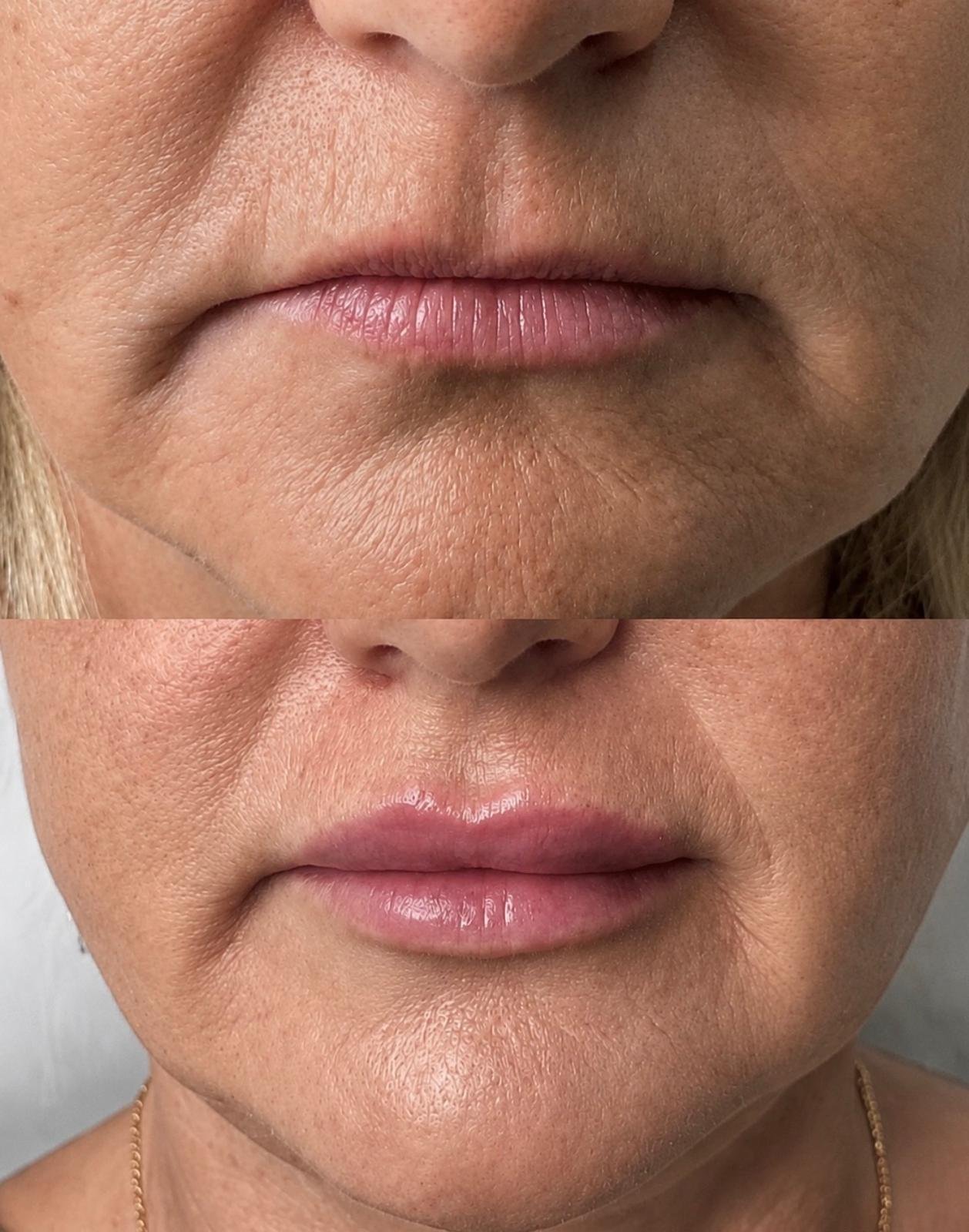
Individual results vary. More cases in Results.
Who it is for
- A hollow that casts a shadow even when well rested
- Dark circles from thin skin rather than pigment
- Crepey texture or fine lines under the eye
- Concealer that creases or looks grey
- Prominent fat bags or significant fluid retention
- Festoons or malar mounds
- Active eye infection, blepharitis or recent eye surgery
- Pregnant or breastfeeding
- Remove bags; that is surgical
- Fix pigment with filler
- Guarantee a result in one visit; PRF is a series
How much does under-eye treatment cost?
Depends on the treatment chosen. Filler is priced per syringe (under-eye plans usually use half a syringe or less, often with cheek support), PRF and PDRN per session in a series of two or three. Everything is in writing before treatment.
Prices are confirmed at consultation and stated with their effective dates. Any offer carries its start and end dates. How pricing works.
What happens, step by step
- ConsultationAssess by cause
Hollow, shadow, puffiness, pigment or texture. Photos in overhead light. Decision on cheek support first.
- Day 0Treatment
Cannula technique for filler, fine needle for PRF. 45 to 60 minutes including numbing and, for PRF, the blood draw.
- Days 1 to 7Swelling
The under-eye swells more than other areas. Sleep elevated, cold compress, no rubbing. Bruises fade within a week.
- Weeks 2 to 4Review
Review once swelling has settled, part of your plan; any adjustment is quoted and agreed first.
- Weeks 4 to 8PRF sessions and result
Second and third PRF sessions; skin quality and darkness improve over two to three months.
Risks and side effects
Common: swelling for several days, bruising, temporary unevenness. Uncommon: prolonged puffiness or a bluish tint (Tyndall effect) from HA filler placed too superficially, which is correctable with hyaluronidase; small lumps that settle. Rare but serious: vascular occlusion with filler, with risk to vision. This is why the plan starts with the cheek, uses small amounts, and often chooses PRF instead.
Full informed consent is reviewed before treatment.
Questions about under-eye treatment
Related treatments
Hyaluronic acid gels matched to the area each product is approved for.
PRP and PRF come from your own blood; PDRN does not. None is FDA-approved for skin quality.

References: Instructions for use for Juvéderm Volbella XC, Restylane Eyelight, Belotero Balance (+) and RHA Redensity Eye (FDA PMA database); FDA consumer alert on regenerative medicine products. Individual results vary. This page is educational and not a substitute for a consultation.